 In the Syunik region of southern Armenia, where daily life is shaped by proximity to mines and tailings dams, Ani Sargsyan and her team are working to make something else visible: the voices of communities that are often unheard. Her path toward civic engagement began years ago, when she and other young people organized a petition campaign to prevent the opening of a new mining plant in Kapan. Today, her focus lies on social justice and everyday living conditions in the neighboring settlements of Geghanush and Gomaran.
Recent field research conducted by Ani and the youth organization Youth Impulse confirms what many residents had long felt but rarely articulated publicly. Despite their borderland status and exposure to environmental and social risks, these villages are frequently overlooked by development and social support programs. Through 25 individual interviews and two focus group discussions, residents openly described problems ranging from poor road infrastructure and lack of public transport to inadequate healthcare services and poverty-related barriers to medical care.
“Before conducting the research, we ourselves did not realize how many problems there were,” Ani explains. “People have no public transport after noon, outpatient clinics lack water and basic facilities, and many families live next to tailings dams. Some cannot even use their gardens as a source of income.”
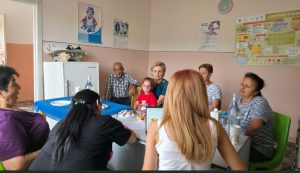
The initiative does not position itself against the local economy or mining as such. Instead, it focuses on standing with people and addressing their concrete needs. Throughout the process, the team shares findings with residents, organizes discussions, and validates conclusions together with the communities. This participatory approach leads to a noticeable shift.
“People used to believe that their voices would not change anything,” Ani says. “Now they see that their problems can be heard, and many are joining the active phase of the initiative.”
The research also reveals untapped alternatives. Some residents are engaged in sheep breeding, while women express interest in small-scale production such as dried fruit. What is missing are resources, infrastructure, and inclusion in local development planning. Based on community input, the team prepares a package of recommendations addressing healthcare access, transport schedules, road repairs, heating, compensation for environmental damage, and mechanisms for civic participation.
Currently, Ani and her colleagues are running a petition campaign to ensure that these priority issues are included in the community development plan. They also emphasize the need to monitor how funds allocated for social programs—often linked to mining-related decisions—are actually distributed and whether they reach the affected settlements.
One tangible success already stands out: representatives of the Community Council express readiness to put the presented issues and a poverty reduction plan on the official agenda for discussion.
For Ani, this moment confirms that persistent civic action matters.
In the Syunik region of southern Armenia, where daily life is shaped by proximity to mines and tailings dams, Ani Sargsyan and her team are working to make something else visible: the voices of communities that are often unheard. Her path toward civic engagement began years ago, when she and other young people organized a petition campaign to prevent the opening of a new mining plant in Kapan. Today, her focus lies on social justice and everyday living conditions in the neighboring settlements of Geghanush and Gomaran.
Recent field research conducted by Ani and the youth organization Youth Impulse confirms what many residents had long felt but rarely articulated publicly. Despite their borderland status and exposure to environmental and social risks, these villages are frequently overlooked by development and social support programs. Through 25 individual interviews and two focus group discussions, residents openly described problems ranging from poor road infrastructure and lack of public transport to inadequate healthcare services and poverty-related barriers to medical care.
“Before conducting the research, we ourselves did not realize how many problems there were,” Ani explains. “People have no public transport after noon, outpatient clinics lack water and basic facilities, and many families live next to tailings dams. Some cannot even use their gardens as a source of income.”
The initiative does not position itself against the local economy or mining as such. Instead, it focuses on standing with people and addressing their concrete needs. Throughout the process, the team shares findings with residents, organizes discussions, and validates conclusions together with the communities. This participatory approach leads to a noticeable shift.
“People used to believe that their voices would not change anything,” Ani says. “Now they see that their problems can be heard, and many are joining the active phase of the initiative.”
The research also reveals untapped alternatives. Some residents are engaged in sheep breeding, while women express interest in small-scale production such as dried fruit. What is missing are resources, infrastructure, and inclusion in local development planning. Based on community input, the team prepares a package of recommendations addressing healthcare access, transport schedules, road repairs, heating, compensation for environmental damage, and mechanisms for civic participation.
Currently, Ani and her colleagues are running a petition campaign to ensure that these priority issues are included in the community development plan. They also emphasize the need to monitor how funds allocated for social programs—often linked to mining-related decisions—are actually distributed and whether they reach the affected settlements.
One tangible success already stands out: representatives of the Community Council express readiness to put the presented issues and a poverty reduction plan on the official agenda for discussion.
For Ani, this moment confirms that persistent civic action matters.
Armenia
Tracing social justice: the unheard voices of Geghanush and Gomaran
In the Syunik region of southern Armenia, where daily life is shaped by proximity to mines and tailings dams, Ani Sargsyan and her team are working to make something else visible: the voices of communities that are often unheard. Her path toward civic engagement began years ago, when she and other young people organized a petition campaign to prevent the opening of a new mining plant in Kapan. Today, her focus lies on social justice and everyday living conditions in the neighboring settlements of Geghanush and Gomaran.
Recent field research conducted by Ani and the youth organization Youth Impulse confirms what many residents had long felt but rarely articulated publicly. Despite their borderland status and exposure to environmental and social risks, these villages are frequently overlooked by development and social support programs. Through 25 individual interviews and two focus group discussions, residents openly described problems ranging from poor road infrastructure and lack of public transport to inadequate healthcare services and poverty-related barriers to medical care.
“Before conducting the research, we ourselves did not realize how many problems there were,” Ani explains. “People have no public transport after noon, outpatient clinics lack water and basic facilities, and many families live next to tailings dams. Some cannot even use their gardens as a source of income.”
The initiative does not position itself against the local economy or mining as such. Instead, it focuses on standing with people and addressing their concrete needs. Throughout the process, the team shares findings with residents, organizes discussions, and validates conclusions together with the communities. This participatory approach leads to a noticeable shift.
“People used to believe that their voices would not change anything,” Ani says. “Now they see that their problems can be heard, and many are joining the active phase of the initiative.”
The research also reveals untapped alternatives. Some residents are engaged in sheep breeding, while women express interest in small-scale production such as dried fruit. What is missing are resources, infrastructure, and inclusion in local development planning. Based on community input, the team prepares a package of recommendations addressing healthcare access, transport schedules, road repairs, heating, compensation for environmental damage, and mechanisms for civic participation.
Currently, Ani and her colleagues are running a petition campaign to ensure that these priority issues are included in the community development plan. They also emphasize the need to monitor how funds allocated for social programs—often linked to mining-related decisions—are actually distributed and whether they reach the affected settlements.
One tangible success already stands out: representatives of the Community Council express readiness to put the presented issues and a poverty reduction plan on the official agenda for discussion.
For Ani, this moment confirms that persistent civic action matters.