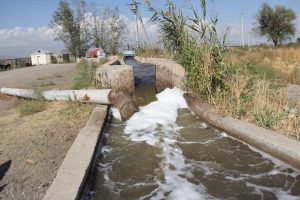
 In the Armenian village of Artashar in the Armavir region, water has long been a source of existential insecurity. The lack of clean irrigation water forced local residents to use domestic wastewater flowing in from the cities of Armavir and Metsamor to irrigate their fields. This situation had serious consequences for public health, the quality of agricultural production, and the overall economic stability of the community.
Artashar is an agricultural village where most families depend on crop cultivation for their livelihoods. The use of wastewater led to persistent odors, deteriorating sanitary conditions, declining yields, and difficulties in selling agricultural products. At the same time, concerns grew about long-term health risks and soil degradation.
This situation prompted a local initiative led by Angela Stepanyan from the NGO “Sustainable Development of the Region.” The campaign, titled “Free Homes and Gardens from Domestic Wastewater,” aimed to identify realistic and gradual solutions to improve access to irrigation water and reduce the village’s dependence on contaminated sources.
The first step was to involve local residents themselves. Community meetings were held to map the concrete impacts of the problem and discuss possible solutions. An eight-member initiative group was formed from the most active residents, becoming a key partner in the campaign.
Together with the initiative group, non-functioning artesian wells were assessed and negotiations were initiated with the irrigation water supplier in Armavir. As a result, a regular supply of additional irrigation water to the village was agreed upon, which immediately reduced the concentration of wastewater in the irrigation system.
At the same time, intensive communication took place with local and national authorities—from the Metsamor municipal administration and regional government to the ministries responsible for territorial administration, environment, and economy. Through formal letters, personal meetings, and expert documentation, a major breakthrough was achieved: the project to drill new deep wells was included in the state subsidy program for 2026.
The initiative achieved tangible results. Two new water sources with a combined capacity of approximately 40 liters per second were connected to the irrigation system. Around 130 hectares of agricultural land were freed from direct irrigation with domestic wastewater, significantly reducing the associated risks. Although the drilling of new wells was postponed to 2026 due to budget constraints, the key decision to implement them has already been made.
The story of Artashar demonstrates that local problems cannot be solved without the active participation of residents. The campaign was not only a technical project focused on water, but also a process of strengthening civic voice, trust, and cooperation between the community and public institutions. Residents learned how to articulate their demands, rely on data and expert arguments, and engage systematically with responsible authorities.
The initiative in Artashar does not end with these achievements. Members of the initiative group plan to continue monitoring the fulfillment of commitments by public authorities—especially the implementation of deep wells in 2026—and to respond to new challenges. The case of Artashar shows that even in small communities, civic engagement can lead to concrete and measurable change—when it is guided by a clear goal, strong local involvement, and persistence.
In the Armenian village of Artashar in the Armavir region, water has long been a source of existential insecurity. The lack of clean irrigation water forced local residents to use domestic wastewater flowing in from the cities of Armavir and Metsamor to irrigate their fields. This situation had serious consequences for public health, the quality of agricultural production, and the overall economic stability of the community.
Artashar is an agricultural village where most families depend on crop cultivation for their livelihoods. The use of wastewater led to persistent odors, deteriorating sanitary conditions, declining yields, and difficulties in selling agricultural products. At the same time, concerns grew about long-term health risks and soil degradation.
This situation prompted a local initiative led by Angela Stepanyan from the NGO “Sustainable Development of the Region.” The campaign, titled “Free Homes and Gardens from Domestic Wastewater,” aimed to identify realistic and gradual solutions to improve access to irrigation water and reduce the village’s dependence on contaminated sources.
The first step was to involve local residents themselves. Community meetings were held to map the concrete impacts of the problem and discuss possible solutions. An eight-member initiative group was formed from the most active residents, becoming a key partner in the campaign.
Together with the initiative group, non-functioning artesian wells were assessed and negotiations were initiated with the irrigation water supplier in Armavir. As a result, a regular supply of additional irrigation water to the village was agreed upon, which immediately reduced the concentration of wastewater in the irrigation system.
At the same time, intensive communication took place with local and national authorities—from the Metsamor municipal administration and regional government to the ministries responsible for territorial administration, environment, and economy. Through formal letters, personal meetings, and expert documentation, a major breakthrough was achieved: the project to drill new deep wells was included in the state subsidy program for 2026.
The initiative achieved tangible results. Two new water sources with a combined capacity of approximately 40 liters per second were connected to the irrigation system. Around 130 hectares of agricultural land were freed from direct irrigation with domestic wastewater, significantly reducing the associated risks. Although the drilling of new wells was postponed to 2026 due to budget constraints, the key decision to implement them has already been made.
The story of Artashar demonstrates that local problems cannot be solved without the active participation of residents. The campaign was not only a technical project focused on water, but also a process of strengthening civic voice, trust, and cooperation between the community and public institutions. Residents learned how to articulate their demands, rely on data and expert arguments, and engage systematically with responsible authorities.
The initiative in Artashar does not end with these achievements. Members of the initiative group plan to continue monitoring the fulfillment of commitments by public authorities—especially the implementation of deep wells in 2026—and to respond to new challenges. The case of Artashar shows that even in small communities, civic engagement can lead to concrete and measurable change—when it is guided by a clear goal, strong local involvement, and persistence.
Arménie
When Water Determines the Future of a Village: The Path of an Initiative in Artashar
In the Armenian village of Artashar in the Armavir region, water has long been a source of existential insecurity. The lack of clean irrigation water forced local residents to use domestic wastewater flowing in from the cities of Armavir and Metsamor to irrigate their fields. This situation had serious consequences for public health, the quality of agricultural production, and the overall economic stability of the community.
Artashar is an agricultural village where most families depend on crop cultivation for their livelihoods. The use of wastewater led to persistent odors, deteriorating sanitary conditions, declining yields, and difficulties in selling agricultural products. At the same time, concerns grew about long-term health risks and soil degradation.
This situation prompted a local initiative led by Angela Stepanyan from the NGO “Sustainable Development of the Region.” The campaign, titled “Free Homes and Gardens from Domestic Wastewater,” aimed to identify realistic and gradual solutions to improve access to irrigation water and reduce the village’s dependence on contaminated sources.
The first step was to involve local residents themselves. Community meetings were held to map the concrete impacts of the problem and discuss possible solutions. An eight-member initiative group was formed from the most active residents, becoming a key partner in the campaign.
Together with the initiative group, non-functioning artesian wells were assessed and negotiations were initiated with the irrigation water supplier in Armavir. As a result, a regular supply of additional irrigation water to the village was agreed upon, which immediately reduced the concentration of wastewater in the irrigation system.
At the same time, intensive communication took place with local and national authorities—from the Metsamor municipal administration and regional government to the ministries responsible for territorial administration, environment, and economy. Through formal letters, personal meetings, and expert documentation, a major breakthrough was achieved: the project to drill new deep wells was included in the state subsidy program for 2026.
The initiative achieved tangible results. Two new water sources with a combined capacity of approximately 40 liters per second were connected to the irrigation system. Around 130 hectares of agricultural land were freed from direct irrigation with domestic wastewater, significantly reducing the associated risks. Although the drilling of new wells was postponed to 2026 due to budget constraints, the key decision to implement them has already been made.
The story of Artashar demonstrates that local problems cannot be solved without the active participation of residents. The campaign was not only a technical project focused on water, but also a process of strengthening civic voice, trust, and cooperation between the community and public institutions. Residents learned how to articulate their demands, rely on data and expert arguments, and engage systematically with responsible authorities.
The initiative in Artashar does not end with these achievements. Members of the initiative group plan to continue monitoring the fulfillment of commitments by public authorities—especially the implementation of deep wells in 2026—and to respond to new challenges. The case of Artashar shows that even in small communities, civic engagement can lead to concrete and measurable change—when it is guided by a clear goal, strong local involvement, and persistence.