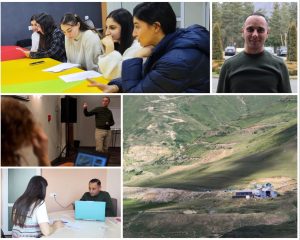
 In Armenia’s regions, the consequences of mining often remain long after extraction activities have ceased. One such case is the area surrounding the Tukhmanuk tailings storage facility in the village of Melikgyuch, Aragatsotn region. Although the Tukhmanuk mine stopped operating as early as 2015, the environmental and social impacts of mining continue to affect the daily lives of local residents.
Gold mining in the area lasted for more than ten years, during which time the tailings facility was completely filled. Even after operations ended, exposed and unprotected areas without vegetation remain in the landscape. According to local residents and available findings, agricultural land in the surrounding area contains toxic substances, including heavy metals that have accumulated over many years. These substances pose a risk not only to the environment but also to human health and the quality of local agriculture, which is the main source of livelihood for the community.
Melikgyuch is a small village with approximately 1,075 inhabitants, most of whom depend on vegetable farming and livestock breeding. Agricultural land, on which families are economically dependent, is among the most affected areas. Soil and water contamination therefore directly threatens not only nature, but also the economic stability of the entire community.
One of the people who decided to actively address this situation is Azat Hovhannisyan. When he saw the scale of the Tukhmanuk tailings facility and its impact on nearby villages with his own eyes, he decided to engage in the fight for its reclamation near his place of residence.
“I knew very little about the dangers that tailings facilities pose. But when I saw their negative impact on agriculture and people’s health, I realized that we have to confront this problem,” Azat explains. While acknowledging that mining can bring short-term economic opportunities, he also points to the high environmental cost that local residents pay for these benefits.
Together with other active residents, farmers and young people, Azat founded the initiative group “Golden Nature.” Its goal is to achieve the reclamation of the Tukhmanuk tailings facility and to draw the attention of responsible institutions to the ongoing risks. The campaign, entitled “An Environmentally Clean Community – Healthy Generations,” focuses on mobilizing local residents through public meetings, signature collection, social surveys and cooperation with the media.
The activities also include systematic mapping of the impacts of the tailings facility on human health, agriculture and quality of life in the village. This information is intended to serve as a basis for dialogue with relevant ministries and public authorities in order to achieve an official decision on reclamation.
The case of Tukhmanuk is not only an environmental issue. It is also about the right of local communities to information, participation in decision-making and fair regional development. Residents of Melikgyuch emphasize that without remediation of contaminated land, it is impossible to speak of sustainable agriculture or a healthy future for the younger generation.
Azat and his team also stress the need to seek more sustainable long-term economic pathways, such as supporting agriculture and the responsible use of natural resources, which could replace the short-term benefits of mining without devastating impacts on the landscape and public health.
The Tukhmanuk tailings facility remains a persistent risk for the region. The story of Melikgyuch shows that even after mining ends, its consequences must be addressed and local residents involved in finding solutions. Without reclamation and a transparent approach, the environmental burden risks being passed on to future generations.
The initiative of local residents demonstrates that civic engagement can be a key driver of change — and that the future of regions does not have to be defined by past mining, but by the ability of communities to assert their right to a healthy and dignified environment.
In Armenia’s regions, the consequences of mining often remain long after extraction activities have ceased. One such case is the area surrounding the Tukhmanuk tailings storage facility in the village of Melikgyuch, Aragatsotn region. Although the Tukhmanuk mine stopped operating as early as 2015, the environmental and social impacts of mining continue to affect the daily lives of local residents.
Gold mining in the area lasted for more than ten years, during which time the tailings facility was completely filled. Even after operations ended, exposed and unprotected areas without vegetation remain in the landscape. According to local residents and available findings, agricultural land in the surrounding area contains toxic substances, including heavy metals that have accumulated over many years. These substances pose a risk not only to the environment but also to human health and the quality of local agriculture, which is the main source of livelihood for the community.
Melikgyuch is a small village with approximately 1,075 inhabitants, most of whom depend on vegetable farming and livestock breeding. Agricultural land, on which families are economically dependent, is among the most affected areas. Soil and water contamination therefore directly threatens not only nature, but also the economic stability of the entire community.
One of the people who decided to actively address this situation is Azat Hovhannisyan. When he saw the scale of the Tukhmanuk tailings facility and its impact on nearby villages with his own eyes, he decided to engage in the fight for its reclamation near his place of residence.
“I knew very little about the dangers that tailings facilities pose. But when I saw their negative impact on agriculture and people’s health, I realized that we have to confront this problem,” Azat explains. While acknowledging that mining can bring short-term economic opportunities, he also points to the high environmental cost that local residents pay for these benefits.
Together with other active residents, farmers and young people, Azat founded the initiative group “Golden Nature.” Its goal is to achieve the reclamation of the Tukhmanuk tailings facility and to draw the attention of responsible institutions to the ongoing risks. The campaign, entitled “An Environmentally Clean Community – Healthy Generations,” focuses on mobilizing local residents through public meetings, signature collection, social surveys and cooperation with the media.
The activities also include systematic mapping of the impacts of the tailings facility on human health, agriculture and quality of life in the village. This information is intended to serve as a basis for dialogue with relevant ministries and public authorities in order to achieve an official decision on reclamation.
The case of Tukhmanuk is not only an environmental issue. It is also about the right of local communities to information, participation in decision-making and fair regional development. Residents of Melikgyuch emphasize that without remediation of contaminated land, it is impossible to speak of sustainable agriculture or a healthy future for the younger generation.
Azat and his team also stress the need to seek more sustainable long-term economic pathways, such as supporting agriculture and the responsible use of natural resources, which could replace the short-term benefits of mining without devastating impacts on the landscape and public health.
The Tukhmanuk tailings facility remains a persistent risk for the region. The story of Melikgyuch shows that even after mining ends, its consequences must be addressed and local residents involved in finding solutions. Without reclamation and a transparent approach, the environmental burden risks being passed on to future generations.
The initiative of local residents demonstrates that civic engagement can be a key driver of change — and that the future of regions does not have to be defined by past mining, but by the ability of communities to assert their right to a healthy and dignified environment.
Armenia
Tukhmanuk: The Region’s Silent Danger
In Armenia’s regions, the consequences of mining often remain long after extraction activities have ceased. One such case is the area surrounding the Tukhmanuk tailings storage facility in the village of Melikgyuch, Aragatsotn region. Although the Tukhmanuk mine stopped operating as early as 2015, the environmental and social impacts of mining continue to affect the daily lives of local residents.
Gold mining in the area lasted for more than ten years, during which time the tailings facility was completely filled. Even after operations ended, exposed and unprotected areas without vegetation remain in the landscape. According to local residents and available findings, agricultural land in the surrounding area contains toxic substances, including heavy metals that have accumulated over many years. These substances pose a risk not only to the environment but also to human health and the quality of local agriculture, which is the main source of livelihood for the community.
Melikgyuch is a small village with approximately 1,075 inhabitants, most of whom depend on vegetable farming and livestock breeding. Agricultural land, on which families are economically dependent, is among the most affected areas. Soil and water contamination therefore directly threatens not only nature, but also the economic stability of the entire community.
One of the people who decided to actively address this situation is Azat Hovhannisyan. When he saw the scale of the Tukhmanuk tailings facility and its impact on nearby villages with his own eyes, he decided to engage in the fight for its reclamation near his place of residence.
“I knew very little about the dangers that tailings facilities pose. But when I saw their negative impact on agriculture and people’s health, I realized that we have to confront this problem,” Azat explains. While acknowledging that mining can bring short-term economic opportunities, he also points to the high environmental cost that local residents pay for these benefits.
Together with other active residents, farmers and young people, Azat founded the initiative group “Golden Nature.” Its goal is to achieve the reclamation of the Tukhmanuk tailings facility and to draw the attention of responsible institutions to the ongoing risks. The campaign, entitled “An Environmentally Clean Community – Healthy Generations,” focuses on mobilizing local residents through public meetings, signature collection, social surveys and cooperation with the media.
The activities also include systematic mapping of the impacts of the tailings facility on human health, agriculture and quality of life in the village. This information is intended to serve as a basis for dialogue with relevant ministries and public authorities in order to achieve an official decision on reclamation.
The case of Tukhmanuk is not only an environmental issue. It is also about the right of local communities to information, participation in decision-making and fair regional development. Residents of Melikgyuch emphasize that without remediation of contaminated land, it is impossible to speak of sustainable agriculture or a healthy future for the younger generation.
Azat and his team also stress the need to seek more sustainable long-term economic pathways, such as supporting agriculture and the responsible use of natural resources, which could replace the short-term benefits of mining without devastating impacts on the landscape and public health.
The Tukhmanuk tailings facility remains a persistent risk for the region. The story of Melikgyuch shows that even after mining ends, its consequences must be addressed and local residents involved in finding solutions. Without reclamation and a transparent approach, the environmental burden risks being passed on to future generations.
The initiative of local residents demonstrates that civic engagement can be a key driver of change — and that the future of regions does not have to be defined by past mining, but by the ability of communities to assert their right to a healthy and dignified environment.